
Raleigh's rental market did something unusual in the run-up to Q2 2026. The headline went down. The 1-bedroom average barely moved. And in a handful of submarkets that used to track the inner loop, rent dropped enough that I have to redraw the search map for clients walking in this spring. Here is what the numbers actually say, where they came from, and how I am using them in real searches this week.
Jump to a section ↓
What the headline numbers say
The single number most renters see is the citywide average, and right now it is going the opposite direction of the headlines a year ago. RentCafe's April 2026 read on Raleigh has the citywide average at $1,560, which is 1.45 percent lower than where it sat the same week of 2025. That is not a crash. It is the first sustained pullback after a multi-year stretch of steady increases, and it is the cleanest signal we have had in a while that the supply pipeline is finally absorbing demand instead of trailing it.
One number does not run a search though. The composition matters. When the average ticks down, it is usually because the top of the stack got softer and the middle got more competitive, not because every unit got cheaper. That distinction is what most renters miss when they read a "rent is dropping" headline and assume their search just got easier.
Where 1BR rent actually went
By unit size, the picture is uneven. 1-bedrooms are basically flat, 2-bedrooms held, and 3-bedrooms softened more than the headline suggests. RentCafe has the 1BR average at $1,374 for 753 square feet, the 2BR at $1,626 for 1,086 square feet, and the 3BR at $2,001 for 1,344 square feet. If you triangulate against Zillow Rental Manager's reads, the statewide North Carolina median rent across all sizes is $1,800 per Zillow Rental Manager. So the takeaway is not that everything is getting cheaper. It is that the middle is stable and the upper end is where landlords are starting to compete for tenants again.
What this means in a real search: a clean-file renter looking for a 1BR around $1,400 has roughly the same number of options now as last spring, just at a slightly better price. A renter looking for a 3BR house at $2,000 or below has noticeably more options than they did 12 months ago, especially if they can flex on year built. And the market for new lease-ups in downtown towers, which I will get to in a second, is the most negotiable it has been since 2021.
The three submarkets that softened
Here is the part that matters for your search. Three Raleigh submarkets dropped enough year over year that they are now sitting below the citywide median, in some cases by a meaningful margin. If your search has been stuck at the same five neighborhoods since last fall, these are the ones worth re-running this week.
Three submarkets to watch in Q2:
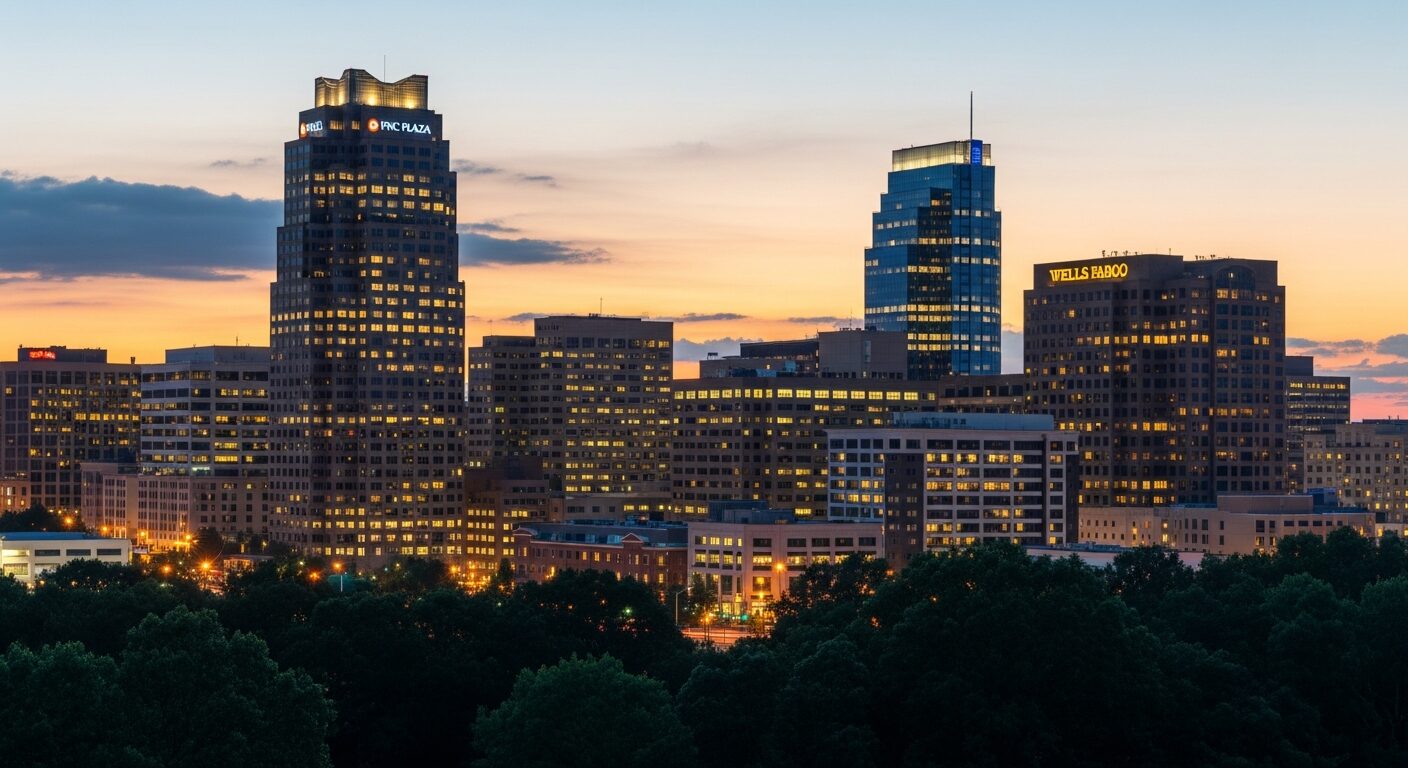
- Downtown Raleigh: average asking rent is $1,872, a 3.96 percent decrease year over year. The new towers around Glenwood South and the warehouse district are running concessions on lease-ups, and that is pulling the average down faster than the rest of the city.
- Cameron Village area: RentCafe's neighborhood read shows a $1,786 average with a 0.04 percent increase year over year — essentially flat. That number skews to smaller, older inventory in and around the village footprint, but the directional hold is real.
- Southwest Raleigh and South Park: Not new-development pricing. These are submarkets that quietly did not participate in the 2024 run-up, and they are still where my best second-chance approvals have been landing.
When the citywide average ticks down, it almost never moves evenly. A 1.5 percent headline drop usually means one or two submarkets did most of the work. Find those, and you find the search.
What this means for your search next 90 days
If you are leasing in Raleigh between now and the end of summer, the playbook has shifted enough that it is worth a deliberate reset. A few things I am telling clients this week.
First, downtown is negotiable in a way it was not last year. The lease-up properties around Glenwood South and the warehouse district are quoting list rents at the top of the stack, and they will come off it for a 13-month lease, an early-bird signing window, or a willingness to take a unit on a less-popular floor. I have seen $1,800 quotes drop to $1,650 with one or two months free on the upper-end inventory. Ask. Then ask again.
Second, the 3-bedroom market favors flexibility on year built. The single-family rental stack saw the largest year-over-year softening, but the negotiable inventory tends to be older. If your filter is set to "2015 or newer" and the search is coming back empty, opening that filter to 2005 or older is where the actual price relief lives right now.
Third, the 1-bedroom market is essentially the same market it was last year, with one caveat. Concessions are back at the new construction tier. The list price did not change much, but a free month or a waived admin fee is now routine on lease-ups that would have refused to negotiate a year ago. If you are touring a brand-new building, the question is not "is the rent lower." It is "what are you offering as a concession." Different question, often a better answer.
The bottom line
Raleigh in Q2 2026 is the most renter-favorable market it has been since the start of the pandemic-era run-up, but only if you read the data correctly. The headline drop is real, the 1BR market is steady, and the actual softening is concentrated in downtown lease-ups and the 3BR single-family stack. If you set up your search assuming "rent is dropping" applies to everything, you will overpay for a 1BR and miss the negotiation room on a 3BR. If you let the data point you at the right submarket and the right unit size, this is a meaningfully better spring to be looking than the last two were.
If you want me to run the verified, MLS-sourced search for your situation and tell you which of these submarkets is your best shot, that is what I do. The link below is the fastest way in.